
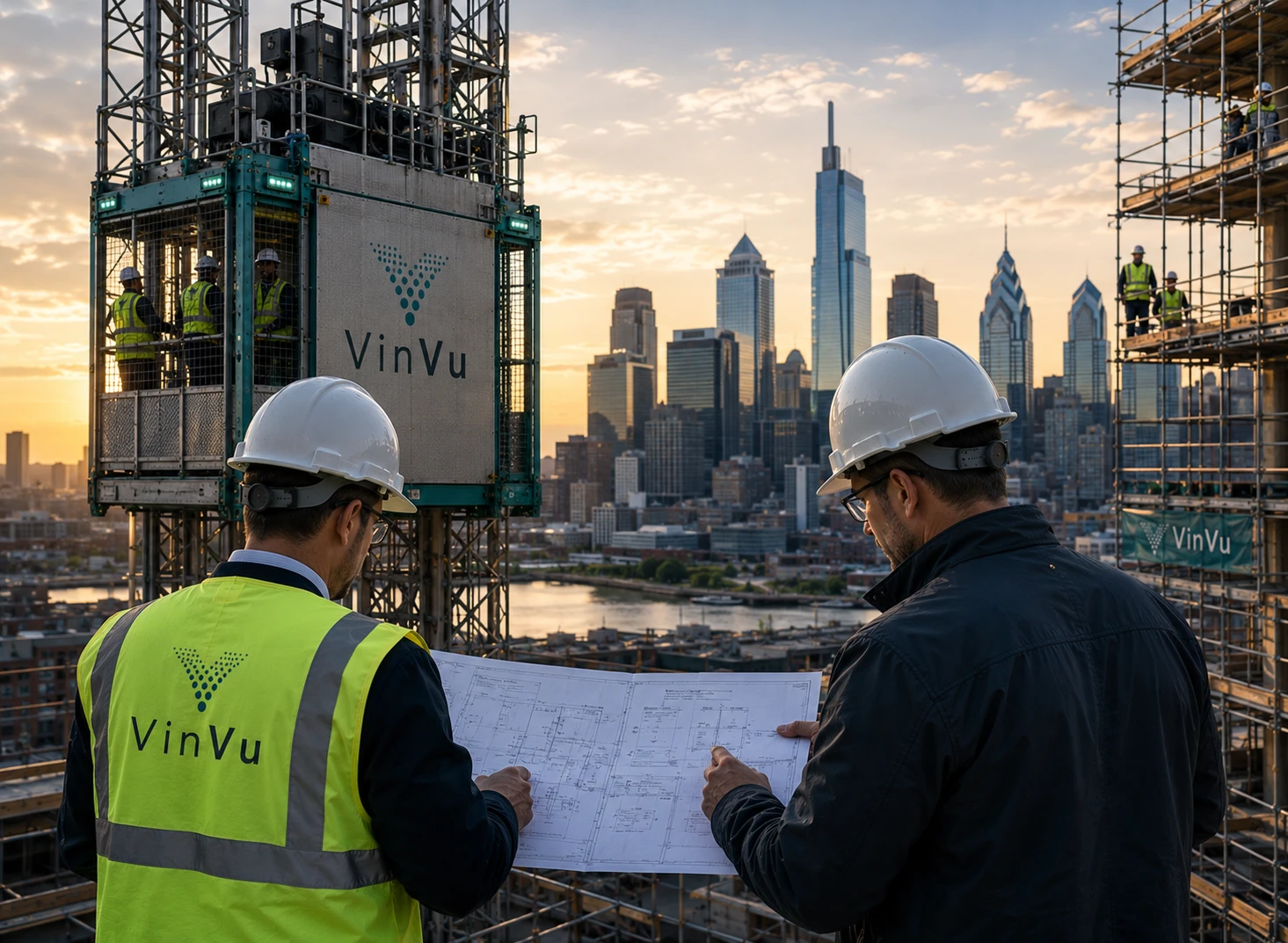
Start with the work your crew needs to perform
Façade access affects where crews can work, how materials reach them, and how each elevation moves toward completion. For general contractors planning masonry, repointing, glazing, or exterior restoration, a mast climbing work platform deserves consideration early in preconstruction.
Choosing a mast climber starts with the work sequence and the building. The useful question is which configuration supports your crew, materials, access constraints, and schedule. A model name and advertised maximum capacity cannot answer that alone. Here is a practical framework for discussing equipment selection with your project team.
Define the access task before comparing equipment
OSHA describes mast climbers as supported scaffolds that position workers, tools, equipment, and materials at working height. Their platforms can be adjusted vertically as work progresses. OSHA identifies them as scaffolds covered by its construction scaffold standards.
Map the actual task: the façade area being worked, required working elevations, crew size, materials staged nearby, and frequency of repositioning. Discuss how the work platform will connect with the project's separate delivery and floor-access arrangements. Equipment approval and intended use must be checked for the specific task.
For an occupied building, include tenant entrances, public walkways, emergency access, and delivery windows in the initial discussion. For new construction, show where façade work overlaps with structural completion and other trades. These details help the supplier evaluate a workable arrangement.
Compare options around the trade and layout
Mast climbing work platforms can be configured for different façade tasks, including masonry, repointing, glazing, and restoration. The project team should review the work sequence, platform layout, and site constraints before requesting a suitable equipment proposal.
Ask the supplier to review the elevation drawings and explain why a particular model and platform layout suit the work. Confirm the working length, platform extensions, building setbacks, corners, obstructions, and proposed mast locations. Request the applicable manufacturer's manual and configuration-specific loading information.
Published maximum dimensions and capacities describe equipment possibilities. They do not establish the allowable load or suitability of your proposed arrangement. NIOSH emphasizes that every mast climber setup is site specific and must be evaluated against the manufacturer's specifications and guidelines.
Build a loading plan that reflects the real shift
A useful loading discussion includes workers, tools, material packages, carts, and accessories, together with where each will be positioned. Explain how deliveries will replenish the platform and how staged quantities change through the shift.
Ask the supplier and qualified design professionals to confirm the permitted loading arrangement for the selected configuration, including any extensions or cantilevered areas. OSHA requires scaffolds to remain within the lower of their maximum intended load or rated capacity.
Put that information into the crew's operating plan. Identify who controls material placement and how changes are reviewed. A delivery arriving in larger packages than expected should trigger a loading review before those packages reach the platform.
Resolve the base, ties, and surrounding site
Equipment selection needs a coordinated review of supporting conditions and building connections. Share structural information, available ground or slab areas, underground constraints, planned excavations, and the proposed installation sequence with the responsible specialists.
The project-specific design should resolve base support, anchorage, clearances, and interaction with surrounding construction. Ask who will provide each required review and when the information must be available. VinVu coordinates these interfaces; qualified providers perform installation and any licensed engineering.
Include electrical supply or other power requirements, delivery access, material staging, overhead hazards, and protection of adjacent activity in the readiness checklist. Identify conflicts before confirming the equipment delivery date.
Assign inspections, training, and removal responsibilities
OSHA requires a competent person to inspect scaffolds for visible defects before each work shift and after an occurrence that could affect structural integrity. Its training standard requires employees working on scaffolds to receive instruction from a person qualified in the subject matter.
The schedule should identify the responsible inspection and training providers, defect reporting, service response, and manufacturer weather limits. Follow the applicable design and manufacturer's procedures for changes to the setup.
Plan dismantling alongside installation. Confirm how the responsible contractor will access the equipment after façade completion and how removal aligns with public access, landscaping, and closeout.
Confirm availability for the entire package
Before committing dates, obtain project-specific confirmation of the model, mast sections, platform components, accessories, service support, and rental period. Availability of a base machine alone does not establish availability of the required package.
Request a written scope showing delivery, installation by the responsible provider, required design reviews, training, service, rental extensions, and dismantling. Give every prerequisite a responsible party and deadline. This makes the equipment proposal easier to compare and the mobilization plan easier to manage.
Bring VinVu into your façade access planning
VinVu is a woman-owned coordinator and IUOE Local 542 signatory. We help construction teams coordinate equipment sourcing, supplier discussions, project readiness, and applicable union operator workforce administration. Equipment availability and configuration are confirmed for each project.
Start a project review at https://www.vinvu.net/project-review/. Send your location, elevation drawings, trade scope, and anticipated dates to swt@vinvu.net, or call 215.510.6587. VinVu can help organize the questions and responsibilities needed to move your access plan forward.
Bring VinVu into the planning conversation.
Send your project location, schedule, and preliminary requirements. Let’s define the next steps.
Request a project reviewReferences
OSHA: Mast climbers and scaffold requirements ↗
NIOSH: Mast Climbing Work Platform Safety ↗